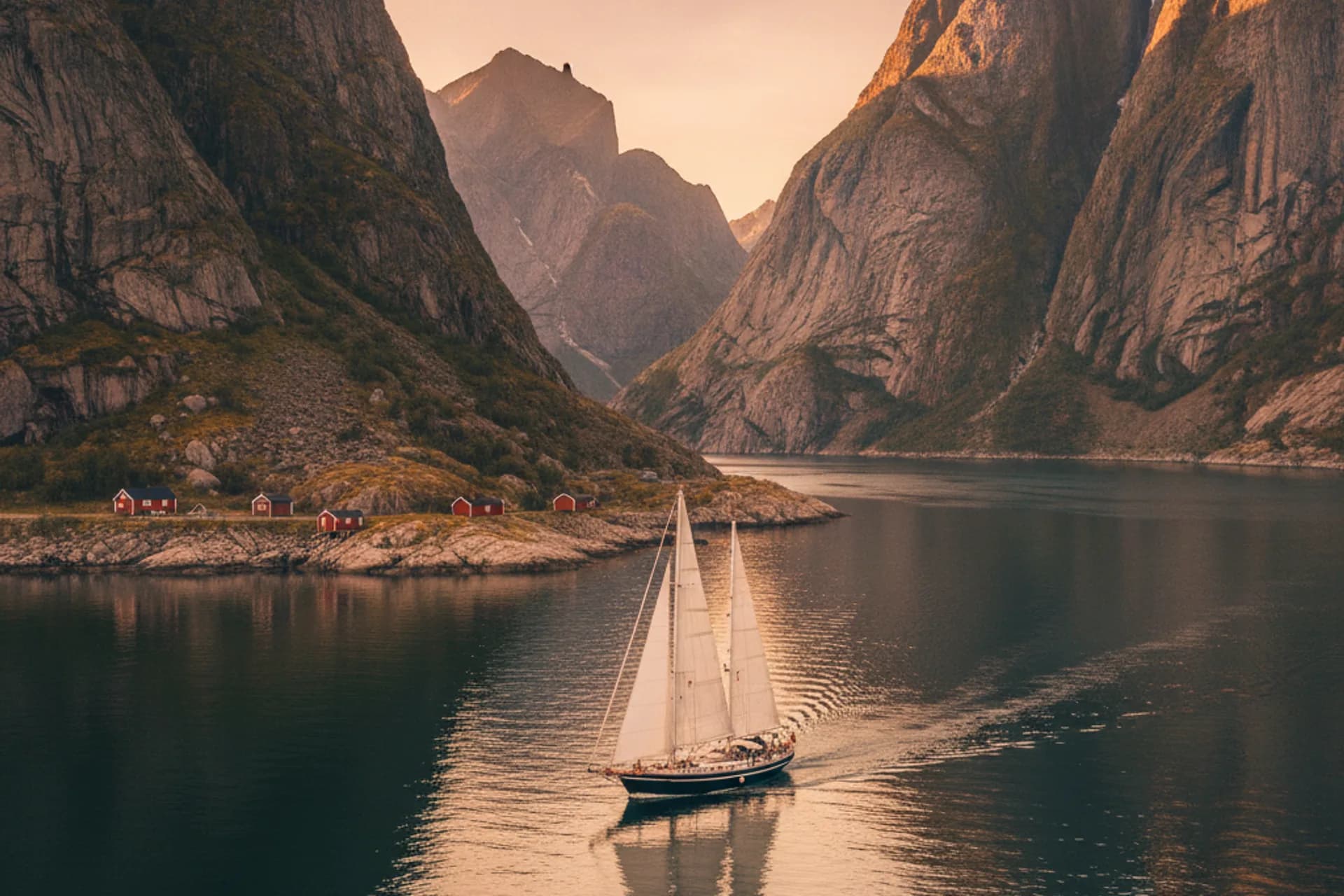
Arctic sailing in Norway: Tromsø & Lofoten from the water
Arctic sailing is the far north of Norway experienced the way it was always meant to be experienced — from the deck of a boat. Above the Arctic Circle the mountains rise straight out of the sea, the light does extraordinary things for months at a time, and the coastline between Tromsø and the Lofoten Islands is one of the most dramatic sailing grounds in Europe.
This guide covers what an arctic sailing trip actually involves, the two very different seasons to choose between, and the real boats you can board: a heated catamaran in Tromsø, a sailboat among the Lofoten peaks, and a dedicated aurora sailing for the dark months.
What arctic sailing is
Sailing in the Arctic is not an expedition reserved for adventurers. The Norwegian coast is sheltered by thousands of islands and skerries, so most trips run on calm, protected water inside the archipelago — fjords, sounds and straits rather than open ocean. Boats are small, groups are small, and the skipper adapts the route to the weather and to what the day offers: a pod of porpoises, a white-tailed eagle overhead, a windless sound with mirror reflections of snow-capped peaks.
What makes it arctic is the setting and the light. North of the Arctic Circle the sun never sets in high summer and barely rises in midwinter, and both extremes transform the same waters into completely different experiences. Add mountains that drop straight into the sea, fishing villages on stilts and air so clear it flattens distance, and a few hours under sail here feel further from everyday life than most week-long holidays.
The two seasons of arctic sailing
The arctic year has two headline acts, and they could hardly be more different. Choose by the light you want on deck.
Midnight sun — roughly May to July
From late May to late July the sun never dips below the horizon above the Arctic Circle. Evening sailings run in full daylight, the light turns gold long before midnight, and the water is often at its calmest late in the evening — the classic time for a midnight-sun sail in Lofoten or Tromsø.
This is the sociable season: warm enough to stay on deck for hours, with seabird colonies at their busiest and the mountains still streaked with snow above green shorelines.
Northern lights — roughly September to March
When darkness returns in autumn, the aurora season begins. From a boat, away from town lights, even faint displays stand out against a fully dark sky, and a skipper can motor toward gaps in the clouds in a way no land-based tour can.
Winter sailing here is calmer than it sounds: trips run on sheltered water aboard heated boats, and stepping from a warm saloon onto a silent, dark fjord as the sky turns green is the single most memorable thing the Norwegian coast offers.
When to go?
- Northern lights
- Midnight sun
- Cruise season
Jan
This month: Northern lights
Best pick: Peak aurora — clear Arctic nights hit 75–80% northern-lights odds.
Select a month to see which experiences are in season.
Three real ways to sail the Arctic
These are the sailings we actually operate in the far north — pick by season and by how you like your deck time.
Tromsø arctic catamaran
A stable, heated catamaran sailing the island-sheltered waters around Tromsø. Runs in every season — midnight sun in summer, low golden light in autumn, snow-covered peaks in winter.
4 hours · Year-round
From NOK 1,490 per person
Lofoten sailing trip
A sailboat beneath the granite walls of the Lofoten archipelago, departing Svolvær in the light season. Sea eagles, fishing villages and the midnight sun from the water.
3.5 hours · Summer (May–Sep)
From NOK 1,200 per person
Northern lights cruise
The dedicated dark-season sailing from Tromsø: a heated catamaran that leaves the city lights behind and chases clear sky while you watch for the aurora from deck or saloon.
4 hours · Winter season
From NOK 1,890 per person
What it’s like on deck
An arctic sailing trip is closer to a small expedition with friends than to a scheduled ferry ride. A few things first-timers consistently notice:
- The silence — once the engine idles down or the sails take over, the loudest sound is often a seabird or the water on the hull.
- Wildlife comes to you: white-tailed sea eagles, seals, porpoises and seasonal whale visits are sightings, not promises — but the odds from a quiet boat are excellent.
- The weather is part of the show. Squalls, sun shafts and rainbows can all cross the same hour, and the skipper reads them constantly.
- You never need sailing experience — every trip is skippered and crewed, and you can help with the boat or simply watch the mountains go by.
- It is warmer than you fear: heated cabins, thermal suits on many boats and sheltered water mean comfort matters more than heroics.
Arctic sailing FAQ
- Do I need sailing experience to join an arctic sailing trip?
- No. All sailings are led by a professional skipper and crew. You are welcome to help trim sails on the sailboat trips or simply enjoy the ride — the boats are chosen for stability and comfort on sheltered coastal water.
- When is the best time to go arctic sailing in Norway?
- There are two prime windows: late May to late July for the midnight sun, when it is bright around the clock, and September to March for the northern lights, when dark evenings make the aurora visible from the water. Both are spectacular — they are simply different trips.
- How cold is it on deck?
- Cooler than on shore, but manageable. Summer evenings call for a warm jumper and a windproof layer; in winter you dress in serious layers, and the boats have heated indoor saloons — many also lend thermal suits. Cold feet are the usual weak point, so bring proper footwear.
- Will I see whales or the northern lights on a sailing trip?
- Neither can be guaranteed — wildlife and aurora are wild phenomena. What a boat gives you is better odds: quiet approach and open horizons for wildlife, and darkness plus mobility for the lights. Winter whale visits around Tromsø are seasonal, so ask about current conditions when booking.
- Is arctic sailing suitable for children or older travellers?
- Generally yes. The catamaran sailings from Tromsø run on calm, sheltered water with heated indoor seating and are comfortable for all ages. The Lofoten sailboat trip is also family-friendly in the light season. Mention any mobility needs when booking so the crew can help at the quay.
Plan your arctic sailing trip
Tell us your dates and whether you are chasing the midnight sun or the aurora, and we will match you with the right sailing — shared trip or private charter, Tromsø or Lofoten.
Keep exploring
Tromsø travel guide
The Arctic capital: when to visit, what to do, and the sailings that leave from its harbour.
Read more →Lofoten travel guide
The archipelago of granite peaks and fishing villages — how to plan your days on and off the water.
Read more →Arctic sailing in depth
Our long-form guide to sailing Norway’s far north, season by season.
Read more →Midnight sun sailing guide
What a sail under the never-setting sun is really like, and how to time it.
Read more →Deep-sea fishing in Norway
Swap sails for rods: how and where to fish the cold, rich waters of the coast.
Read more →Private yacht charter
Skippered boats for private groups — routes, boat types and how chartering works.
Read more →